I cannot recall the exact moment when the phrase “I will say
it again for possible penetration” entered my teaching lexicon. It may have
been from a former instructor in a military classroom, where the assumption was
that all trainees had thick skulls. This phrase often escapes my lips when I
want my students to remember something crucial.
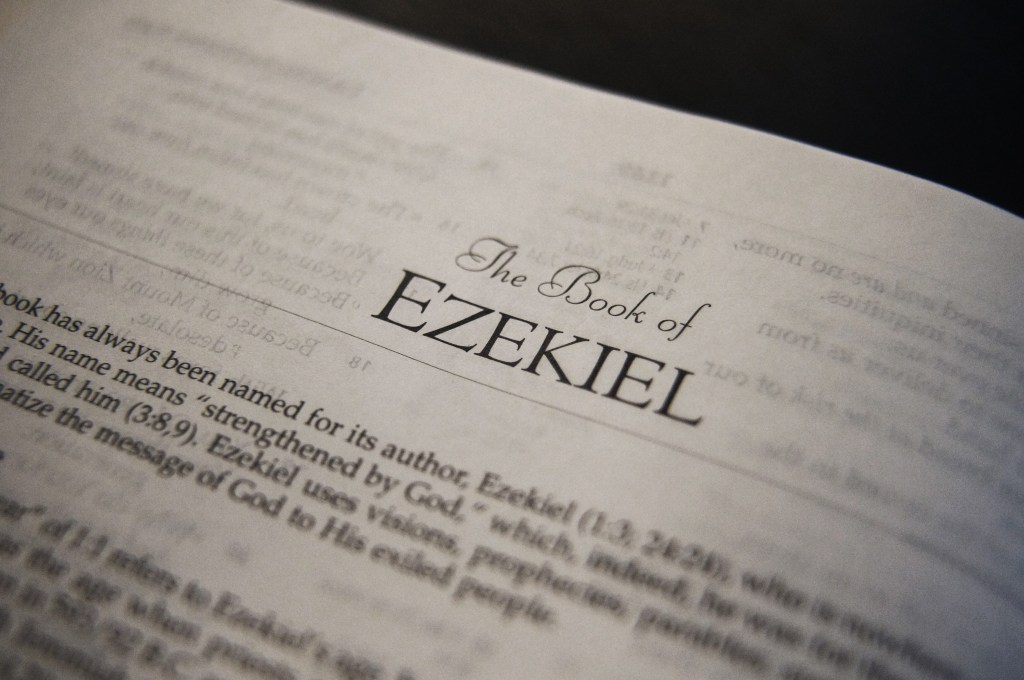
That phrase came to my mind when reading through the book of
Ezekiel this month. Seventy-two times, the phrase “they/you shall/will know
that I am the LORD” is repeated. So, God wants people to know that he is the
Lord. Thank you, Captain Obvious. It is curious, though, that most of those
seventy-two verses are in the context of God pouring out judgment and wrath.
What is God saying to us through that phrase? It’s a powerful reminder of the
importance of recognizing God’s sovereignty, a key to understanding his actions
and our place in his plan.
God announces the terrible events in Ezekiel beforehand to
demonstrate that he is the Lord of history. It isn’t easy to read. For example,
consider Ezekiel 5:13. After listing various areas of disobedience and the
awful judgments to follow, God says, “Thus shall my anger spend itself, and I
will vent my fury upon them and satisfy myself. And they shall know that I am
the LORD—that I have spoken in my jealousy—when I spend my fury upon them.” The
timing of recognizing God as the LORD (Yahweh) is critical. They will know when
they see God pouring out his fury.
Lest you think this God of the Old Testament lacks grace,
and like Marcion, you think he is a different God, think again. God’s wrath
poured out is a display of his grace. How so? God did not wipe out all the Israelites
in Ezekiel. He spared some. The ones spared would know that God is the LORD
after witnessing all the terrible prophecies being fulfilled. That is grace.
What if God had not executed his judgments or given any warning? What if he had
just sent the Babylonian invaders without informing the people? That would be
cruel. Instead, we see the grace in God’s wrath, a reassuring sign that God’s
grace is at work even in his most severe actions.
God is the same in the New Testament. He is revealing his
wrath and warning us so that we will know he is the LORD. Paul reminds us, “For
the wrath of God is revealed from heaven against all ungodliness and
unrighteousness of men, who by their unrighteousness suppress the truth” (Rom.
1:18). The consequences of sin are grave, and God’s wrath is a stark reminder
of this fact. How does God reveal his wrath? In four subsequent verses in
chapter 1, Paul uses the phrase “God gave them up.” That is, God allows their
sin to run its course. The results are spelled out in verses 24-28. When we
see, therefore, all the evils mentioned there, what should we conclude? We
should know that God is the LORD.
There is a great and terrible day of the Lord coming. A day in which God will pour out his unmitigated wrath on unbelievers. I do not wish that on anyone. I am grateful, however, that he is revealing his wrath today. We do not have to look far to see the consequences of humans left to their sins. Grieve when you see it and pray. Pray that God will use it so that someone knows he is the LORD. Also, rejoice in the truth that God’s most incredible display of grace was when he poured out his wrath on Jesus on the cross. Never forget the grace in God’s wrath.
 The Established Path of Discipleship
Leave a comment