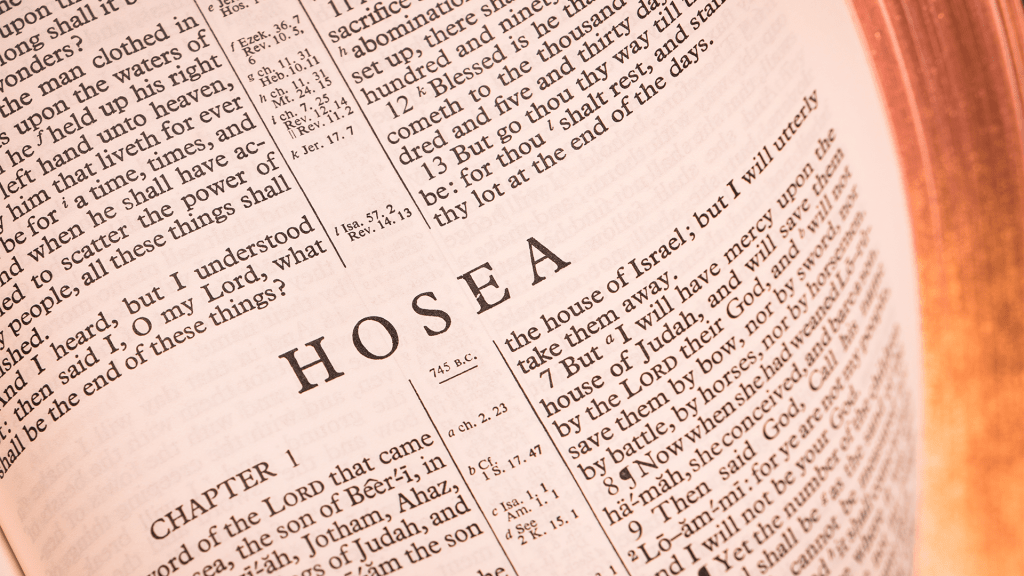
Hosea is a strange yet beautiful book. God tells the prophet Hosea to marry a prostitute because he wants to put the sin of Israel on display (Hos. 1:2). Hosea is strange in that God tells the prophet to marry a prostitute and beautiful in what it teaches us about God’s love.
Rebellion, redemption, and restoration leap from every page of Hosea. Hosea chapter 2 beautifully illustrates these themes. Like bookends holding tomes of moving drama, chapter 2 begins with God’s mercy (v. 1) and ends with God’s mercy (v. 23). Whatever happens in the life of the believer, God’s mercy holds it in place.
In verses 2-13, Hosea catalogues the rebellion of Israel. He compares Israel’s rebellion to adultery, the shameful acts of a whore. We see ourselves in these verses. We boldly seek to meet our needs through illegitimate means (v. 5), and we forget only God can truly satisfy (v. 8). We adorn ourselves with the fineries of rebellion—we forget God (v. 13).
But God loves us, he redeems us. In verses 14-20, shockingly God comes after the rebellious. He brings us back to himself tenderly (v. 14). God betroths us; he joins us to himself “in righteousness and in justice, and in steadfast love and mercy” (v. 19). This passage is perhaps one of the most beautiful descriptions of what happened at the cross in the Old Testament. God makes us righteous by pouring out his justice on his son. He did this because of his “steadfast love and mercy.” As we experience this steadfast love and mercy, we know God (v. 20).
God does not stop with redemption. The story continues. He restores us. God answers his creation and plants us for himself in the land—he provides for his children. Previously, we received no mercy—we were not God’s people. Now, we are God’s people. It is personal; we can say, “You are my God” (v. 23).
 The Established Path of Discipleship
Leave a comment