I witnessed something mildly amusing this morning while walking on the treadmill at my local gym. A very enthusiastic, trim but muscular-looking fitness coach was working with a young, overweight lady. As the fitness coach demonstrated each exercise, her overweight student responded with an exhausted, overwhelmed look. Then, she would reluctantly do the exercise with a quarter of the intensity of her coach and barely resembling the form of the coach. I was mildly amused because it reminded me how we more mature Christians sometimes overwhelm new Christians.
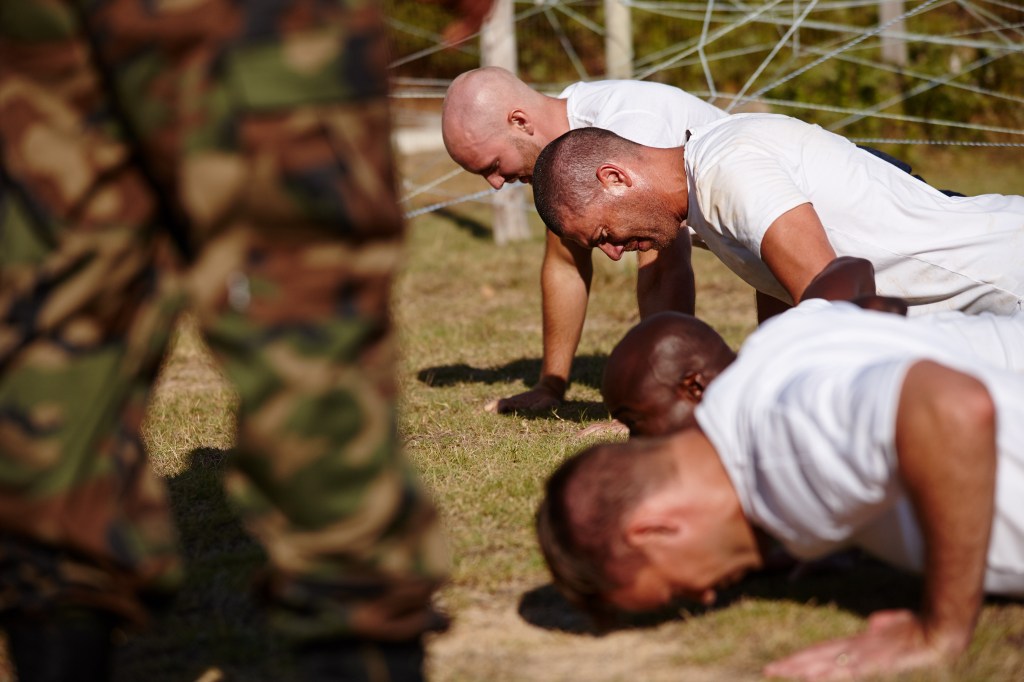
Instead of seeing disciple-making as a slow, deliberate relationship with an individual, we often consider a new Christian a recruit who must go through an intensive boot camp. We give them a long list of to-dos such as reading through the Bible in a year (4 chapters a day), praying for at least 30 minutes to an hour a day, memorizing two verses a week, and so on. The new Christian then looks at us, wondering why this nice person who led me to Christ has transformed into a drill sergeant.
Despite what many may think of the Apostle Paul, he was no drill sergeant. When it came to making disciples, it was a relationship, not a project. He called Timothy “my true child in the faith” and “my beloved child” (1 Tim. 1:2; 2 Tim. 2:2). Paul had enough of a relationship with Timothy to understand how Timothy came to faith in Christ (2 Tim. 1:5). Even though Paul was not at Thessalonica very long, the relational aspect of discipleship is evident in his use of family language in 1 Thessalonians:
But we were gentle among you, like a nursing mother taking care of her own children. So, being affectionately desirous of you, we were ready to share with you not only the gospel of God but also our own selves, because you had become very dear to us (2:7-8).
For you know how, like a father with his children, we exhorted each one of you and encouraged you and charged you to walk in a manner worthy of God, who calls you into his own kingdom and glory (2:11-12).
The numerous references to the Church being a family in the New Testament are instructive. We are the family of God. New believers are not recruits, and neither are they our projects. They are babes in Christ, added to our family by the wise and gracious providence of the Lord (Acts 2:47). We must, therefore, treat them as such, realizing that we must care for them (disciple them) with the same patience and care required for a newly arrived infant. You wouldn’t ask an infant to drop and give you 50 push-ups or go on a 10-mile hike with a loaded pack. Likewise, we shouldn’t overwhelm our new brothers and sisters with burdens they were not meant to carry.
 The Established Path of Discipleship
Leave a comment